Skip to content
Used Ferrari Price Inflation
Why Used Ferrari Prices Are Changing in 2026
The used Ferrari market has always behaved differently from the broader luxury car market. While most exotic brands experience steep depreciation, Ferrari has historically protected its values through limited production, strong brand prestige, and a loyal collector ecosystem. But in 2026, the market is shifting again.
From entry-level grand tourers like the Ferrari California to hybrid hypercars such as the Ferrari SF90 Stradale, buyers are seeing more inventory, softer pricing, and better negotiation opportunities than they did during the post-pandemic boom years.

The Ferrari Bubble Has Cooled — But Not Collapsed
During 2021 and 2022, used Ferraris surged in value as wealthy buyers flooded the exotic market. Limited supply, rising inflation, and ultra-low interest rates created a near-perfect storm for collectible cars.
That environment no longer exists.
Recent market analysis shows Ferrari prices have softened across many modern models, especially newer hybrids and front-engine GT cars. However, Ferrari continues to outperform rivals such as McLaren and Lamborghini in long-term value retention. Some studies estimate Ferrari depreciation at roughly 12–18% over five years, compared with 20–40% for competing exotic brands. (Automonitor)
That distinction matters because Ferrari buyers are rarely shopping for transportation alone. They are buying exclusivity, heritage, and often investment potential.
Which Used Ferraris Are Falling Fastest?
Not all Ferraris behave the same way on the used market.
Newer high-production luxury models have experienced the sharpest corrections. Cars such as the Ferrari Roma and Ferrari Portofino have seen moderate but steady declines as more examples enter the secondary market. (Ferrari Deals)
The biggest drops have appeared in Ferrari’s hybrid performance models. The Ferrari SF90 Stradale reportedly declined by more than 16% year-over-year in some markets, while used Ferrari 296 GTB listings are increasingly showing price reductions. (Ferrari Deals)
Part of the reason is simple economics: ultra-expensive modern Ferraris were heavily inflated during the pandemic era, and many buyers are now waiting for prices to settle further before purchasing.
There is also some uncertainty around the long-term desirability of hybrid Ferraris compared with traditional naturally aspirated V8 and V12 models.

Older Ferraris Are Holding Up Surprisingly Well
While modern Ferraris are softening, several older analog-era models remain remarkably resilient.
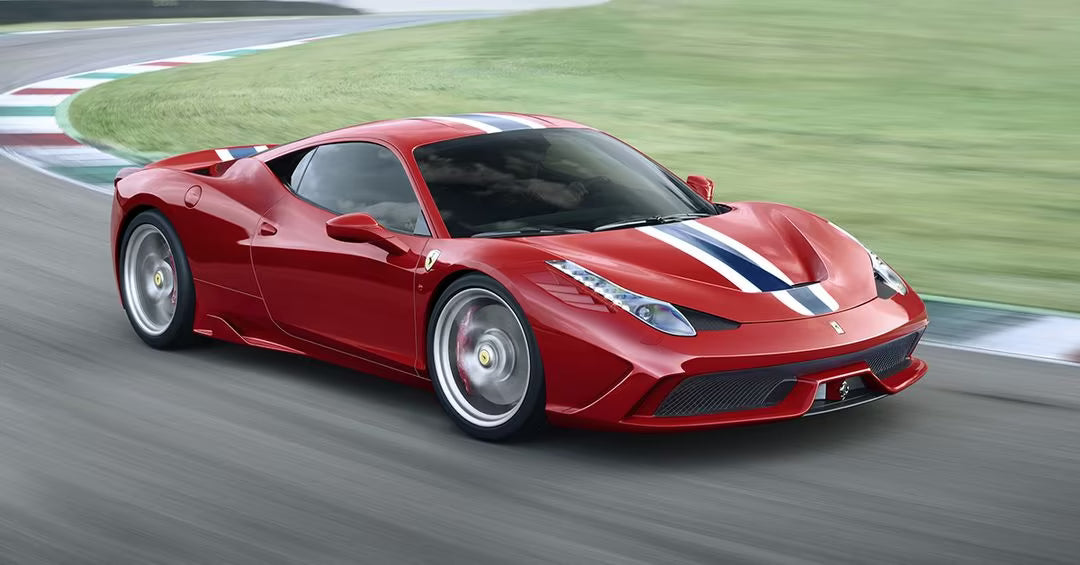
Cars like the Ferrari F430, Ferrari 458 Italia, and manual-gated V12 Ferraris are increasingly viewed as “modern classics.” Enthusiasts appreciate their mechanical feel, naturally aspirated engines, and relative simplicity compared with newer hybrid systems.
Community discussions on Reddit and enthusiast forums consistently highlight the growing demand for manual or naturally aspirated Ferraris. Some collectors even compare used Ferrari pricing favorably against high-end Porsche models, arguing that Ferrari now offers stronger emotional appeal at similar price points. (Reddit)
The Ferrari F40 and Ferrari F50 continue to command enormous collector premiums, with auction records climbing sharply in recent years. (Reddit)
Entry-Level Ferrari Prices Are Becoming More Accessible
One of the biggest changes in the market is affordability at the lower end of the Ferrari spectrum.
Used Ferrari listings in the UK now start below £50,000, with the average market price sitting around £157,000 across all models. Popular entry points include the Ferrari California and early Ferrari F430 examples. (AutoUncle)
For many buyers, this creates an unusual opportunity: Ferrari ownership is no longer limited exclusively to ultra-high-net-worth collectors.
However, purchase price is only part of the equation.
Maintenance, servicing, insurance, and depreciation can quickly transform a “cheap Ferrari” into an expensive financial commitment. Buyers should always budget carefully for annual ownership costs, especially on older cars with complex service histories.
Why Ferrari Still Defies Normal Depreciation
Ferrari’s long-term strength comes down to scarcity and emotional value.
Unlike many luxury automakers, Ferrari deliberately limits production volumes. The company carefully manages customer allocations and maintains a strong sense of exclusivity around ownership. This helps stabilize resale prices even during market slowdowns.
Certain Ferraris also benefit from what collectors call “halo status.” Cars with naturally aspirated V12 engines, gated manual transmissions, or motorsport heritage often become increasingly desirable as the automotive industry shifts toward electrification.
That trend may become even stronger as Ferrari prepares for its electric future. Enthusiasts already view older combustion-era Ferraris as the final chapter of traditional supercar engineering. (Reuters)
Is Now a Good Time to Buy a Used Ferrari?
For buyers who were priced out during the pandemic surge, 2026 may offer the best Ferrari buying conditions in several years.
Modern hybrid Ferraris and front-engine GT cars are becoming more negotiable. Inventory is improving, and sellers are increasingly willing to reduce asking prices. (AutoUncle)
At the same time, truly collectible Ferraris remain extremely strong. Analog-era V8s, V12 grand tourers, and limited-production halo cars continue attracting serious money from collectors worldwide.
The result is a split market:
-
Modern Ferraris are depreciating more normally again.
-
Classic and enthusiast-focused Ferraris are behaving more like investment assets.
For buyers, the smartest strategy may be focusing on cars with timeless appeal rather than chasing the newest technology.
Because in the Ferrari world, emotion still matters more than logic.
- Posted in:
- Motor Finance